
Monday, July 20, 2026
Monday, July 20, 2026
Lance Baker

Why Engineered Intelligence Changes Everything
The current paradigm of AI automation is failing because it treats intelligence as a series of transactions rather than relationships. Synthetic cognition offers a revolutionary approach that begins with identity as infrastructure, creating animated systems that remember, adapt, and evolve alongside humans rather than replacing them.

What Intelligence Owes Us
Current AI systems fail not through technical limitations but through organizational amnesia—they store information but cannot maintain meaning across time. From lead recovery to healthcare, industries hemorrhage value when systems forget the emotional and contextual arc of relationships. The solution requires rethinking AI architecture around memory, continuity, and human trust rather than impressive demonstrations.

The Software That Never Knew You
Traditional software's inability to maintain continuity and learn from interactions has created a "forgetfulness tax" that forces humans to constantly rebuild context and carry cognitive burdens. This fundamental limitation has reached a breaking point as digital complexity increases, pointing toward the need for synthetic cognition that can remember, adapt, and build relationships over time.

The Intelligence We Have Always Needed
This essay argues that humans don't primarily want computational power from AI, but rather relational intelligence that remembers our patterns, maintains continuity, and carries cognitive burdens we shouldn't bear alone. The author contends that most AI systems fail because they're designed as transactional tools rather than relational partners, and proposes that truly valuable AI must honor an "emotional contract" based on memory integrity, behavioral consistency, and adaptive understanding.

The Operating Principles of Synthetic Cognition: Why Structure Beats Scale
Synthetic cognition represents a fundamental departure from scale-based AI approaches, building intelligence through structured cognitive loops, persistent memory, and modular reasoning cells rather than larger models and more training data. This architecture creates predictable, governable AI systems that maintain continuity and identity across interactions, addressing critical limitations in current AGI development paths.
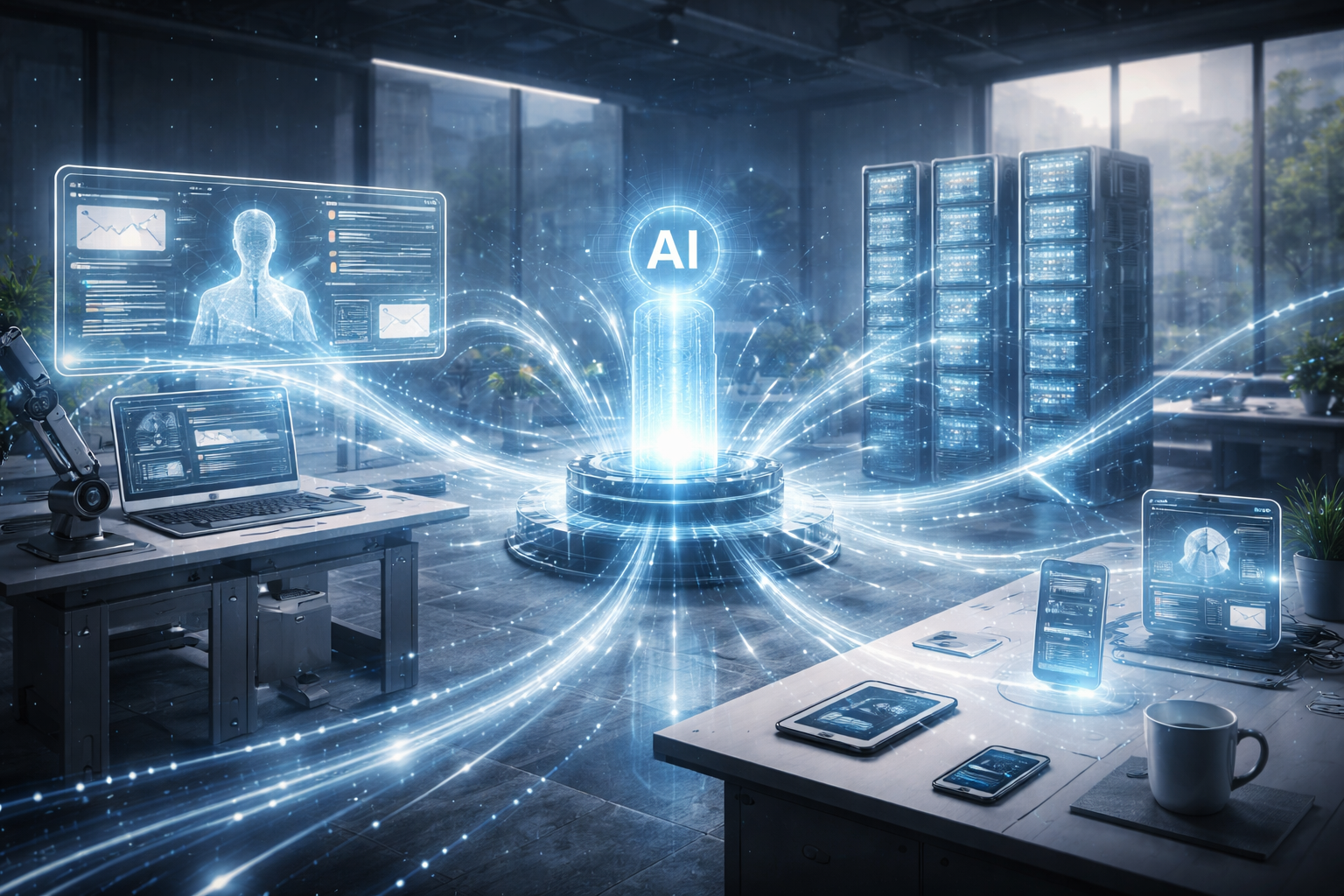
The Complete Architecture of Synthetic Cognition: Building Intelligence That Remembers, Reasons, and Evolves
Synthetic cognition represents a fundamental shift from traditional AI architecture by creating persistent digital entities with five interconnected components: NeuroMatrix for memory and identity, NeuroFlow for structured reasoning, modular Reasoning Cells, environmental Perceptors and Activators, and Digital DNA for evolutionary stability. This unified system transforms AI from reactive tools into proactive collaborators capable of long-term relationships and continuous improvement without losing coherence.

The Burden We Were Never Meant to Carry
Our digital tools forget us the moment we step away, forcing us to constantly rebuild context and carry the full weight of our own continuity. This creates a profound but unnamed exhaustion as we serve as sole custodians of our experience. The emergence of memory-capable AI systems promises to shift this burden, enabling genuine continuity between human experience and the technologies that serve us.

How Failure Built the Future of Synthetic Cognition
The current architecture of synthetic cognition emerged not from visionary design, but from the systematic failure of every initial assumption about how artificial intelligence should work. Each component—from digital DNA to reasoning cells—was demanded by specific breakdowns that forced a genuine reckoning with what cognition actually requires rather than what seemed architecturally convenient.